
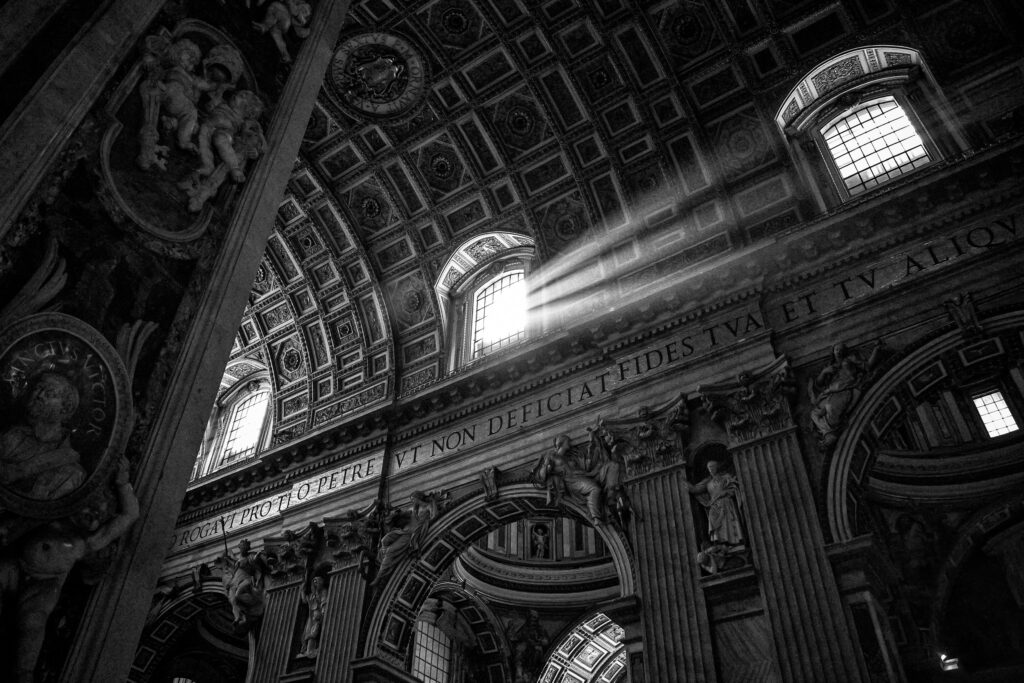
There’s an old story about three people doing exactly the same work.
Ask the first what he’s doing, and he says he’s mixing cement. The second says he’s laying bricks. The third says he’s building a cathedral.
Same task. Same physical reality. Completely different experience of it.
Most leaders, when they hear that story, immediately identify with the cathedral builder. Of course, that’s the perspective I bring. Of course, I see the bigger picture.
But the more important question isn’t which one you are. It’s which one the people around you get to be.
What people believe about their work — whether they’re mixing cement or building something that will outlast them — is largely determined by the environment their leaders create.
This isn’t abstract. It shows up in very practical ways.
There are people who go home from work exhausted and depleted, feeling like they’re a small and replaceable part of someone else’s machine. And there are people doing work that might look identical from the outside — same industry, same role, similar tasks — who go home feeling like what they do matters. Like they’re part of something. Like their contribution is visible and valued.
The work didn’t make that difference. The leadership did.
When leaders are clear about the story they’re telling — when they can articulate not just what needs to get done but why it matters and how each person’s contribution connects to something larger — people can locate themselves in that story. They know where they fit. They understand the cathedral they’re helping to build.
When that clarity is absent, people default to the bricks. They do what’s asked. They meet the expectations in front of them. They stop reaching beyond what’s required because nothing has invited them to.
I think about this like the difference between a school bus, a Greyhound, and a tour bus. All three are buses. All three get you somewhere. But the experience of being on each one is entirely different — and the kind of person who thrives on each one is different too.
Leaders who are clear about what they’re building attract people who want to build it. Leaders who aren’t clear attract people who are just looking for a ride.
The bus you’re driving determines who gets on. And who gets on determines what you can build together.
This doesn’t mean every organization needs to be building a cathedral. Some cultures thrive on speed, precision, and clear execution. Some on creativity and experimentation. Some on deep stability and consistency. None of those is wrong. What’s wrong is being unclear — inviting people onto a bus without telling them where it’s going, then wondering why they don’t seem invested in the destination.
People don’t need the work to be extraordinary to feel like it matters. They need to understand their part in something that has a point.
That understanding is not something people arrive at on their own. It’s something leaders create the conditions for — or don’t.
Photo by Robert Arrington on Unsplash
