
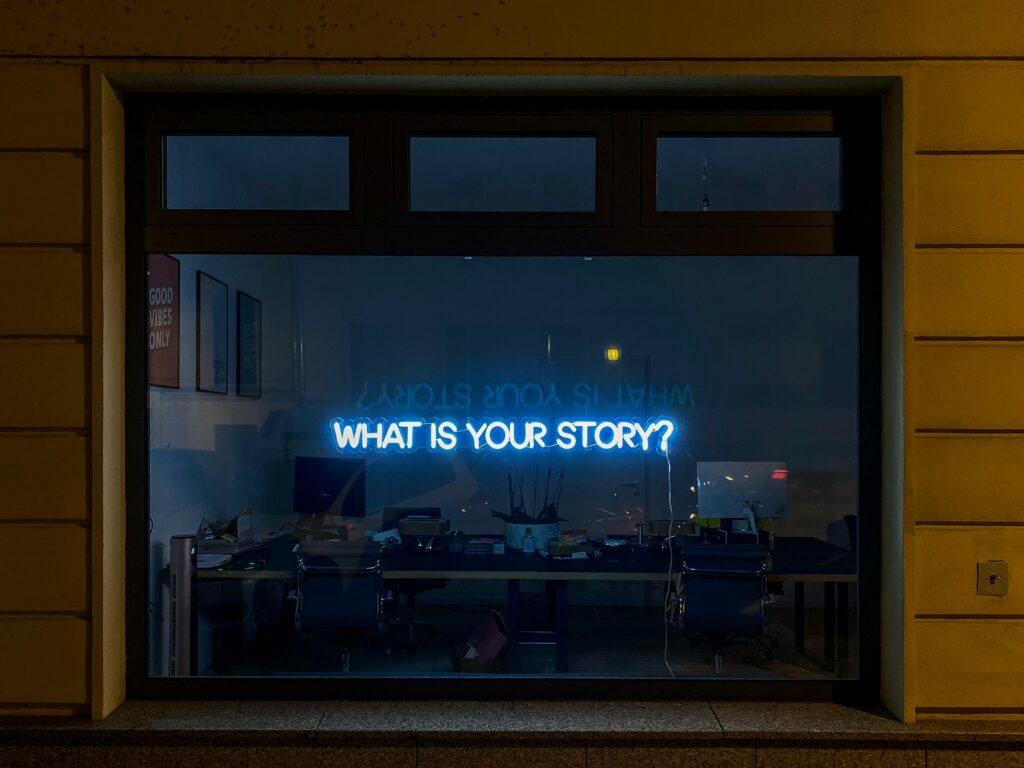
Every leader is telling a story.
Not intentionally, necessarily. Not always consciously. But the people around you are receiving one — through how you respond under pressure, how you handle mistakes, what you reward, what you let slide, and what you do when no one thinks you’re watching.
The question isn’t whether you’re telling a story. You are. The question is whether it’s the one you’d choose if you were paying attention.
I think about this through the lens of genre.
Take any situation — a team navigating change, a conflict that needs to be resolved, a decision that’s harder than anyone expected. The facts of the situation are what they are. But the story that gets told about it? That depends entirely on who’s telling it and how.
The same event can be a romantic comedy, a thriller, or a horror film. The genre changes everything — the decisions, the relationships, the ending.
A leader who brings curiosity and warmth to a difficult conversation is telling a different story than one who brings defensiveness and urgency. A leader who responds to a mistake with genuine interest in learning is writing a different narrative than one who responds with blame. Same situation. Entirely different experience for everyone in the room.
Most leaders don’t choose their genre deliberately. It gets chosen for them — by habit, by pressure, by the way they were managed, by whatever they default to when things get hard. And because they’re inside the story, they often can’t see it clearly. They think they’re leading a story about growth and trust while the people around them are experiencing something that feels more like survival.
This is why the people closest to you are often better mirrors than you are.
I’ve said this to clients more times than I can count: if I had a dollar for every time someone told me “I wish you could see yourself the way other people see you,” I’d have my fancy boat. We don’t always see what we’re projecting. We see our intentions. Other people experience our impact.
When you define your leadership story intentionally — when you name the genre you want to be telling — something shifts for the people around you, too.
There’s a quote from Marianne Williamson that I keep coming back to: “as we let our own light shine, we unconsciously give other people permission to do the same.”
When a leader is willing to be clear about the story they’re trying to tell — not just the tasks they need to accomplish, but the kind of leader they’re choosing to be — it creates room for the people around them to show up more fully, too.
That’s not soft. That’s how cultures get built.
The genre of your leadership story isn’t fixed. It can be written deliberately. But it requires actually stopping to ask the question — what story am I telling right now, and is it the one I’d choose?
Photo by Etienne Girardet on Unsplash
