

When Coaching Doesn’t Stick (And Why That’s Not the Whole Story)
I get asked a version of this question fairly often: Have you ever had a client for whom coaching didn't stick? My answer is yes. But also no. And the reason for both is worth unpacking — because how we answer that question says a lot about how we understand change,...

Mary Pickford and the Ship That Couldn’t Be Sunk
Mary Pickford — one of the most influential figures in early Hollywood — said this: "All the water in the world cannot sink a ship unless it gets inside the ship. All the negativity in the world cannot sink a person unless it gets inside your mind." Read that twice....

Conflict Doesn’t Start When Things Get Hard — It Starts Long Before
When conflict shows up in an organization, most leaders respond to it as an event. Something went wrong. People are in disagreement. Now we need to manage it, resolve it, move through it. That's a reasonable response. It's also mostly too late. Because by the time...

Can You Be Right and Be Loving at the Same Time?
In Season 2, Episode 10 of Ted Lasso, Rebecca’s mom asks the age-old question, "...when all's said and done, what's more important, being loving or being right?" As leaders, we often face that dilemma, and right often wins when it’s a choice. But the real answer isn't...

Not Everything Is Your Fault — But It Might Be Your Responsibility
Most conflicts in organizations aren't actually about the problem. They're about who caused it. The moment something goes wrong, a familiar sequence begins. People start positioning. Protecting. Explaining why the thing that happened wasn't their fault, or at least...

The Lagrange Point
Here's something I didn’t previously know about satellites. A satellite orbiting Earth isn't hovering. It's constantly falling toward the planet — it just happens to be moving fast enough, and from a distance high enough, that as it falls, it swings around Earth...

How to Raise a Leadership Issue When You’re Not the One in Charge
One of the questions I get most often — not from executives, but from the people around them — goes something like this: I can see that something isn't working. I think my leader needs to hear it. But I don't know how to bring it up without making things worse or...

How to Tell If Your Leadership Story Is Actually Working
In a recent post, I wrote about leadership as a story — and more specifically, as a genre. The kind of culture you're building, the way people experience working alongside you, the emotional environment you create without always realizing it. All of it adds up to a...

The Spinach in Your Teeth Problem
If you had spinach stuck in your teeth after lunch and didn't know it, would you want someone to tell you? The answer is always yes. Every single time. I have never once had someone say, "No, I'd rather walk around like that all afternoon than feel the momentary...
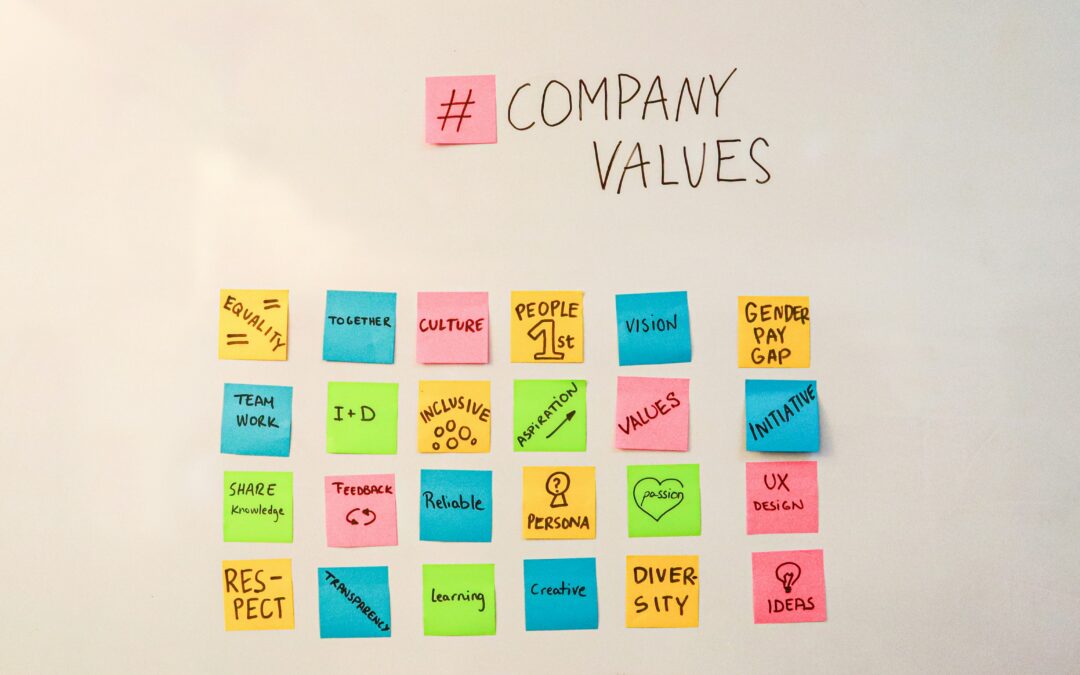
You Wrote the Values. Now Comes the Hard Part.
Most organizations are genuinely good at defining their values. They do the work. They gather the right people, have the right conversations, and land on something that feels true — a set of values or a mission statement that actually captures something meaningful...
